
Expert Embroidery & Screen Printing Services
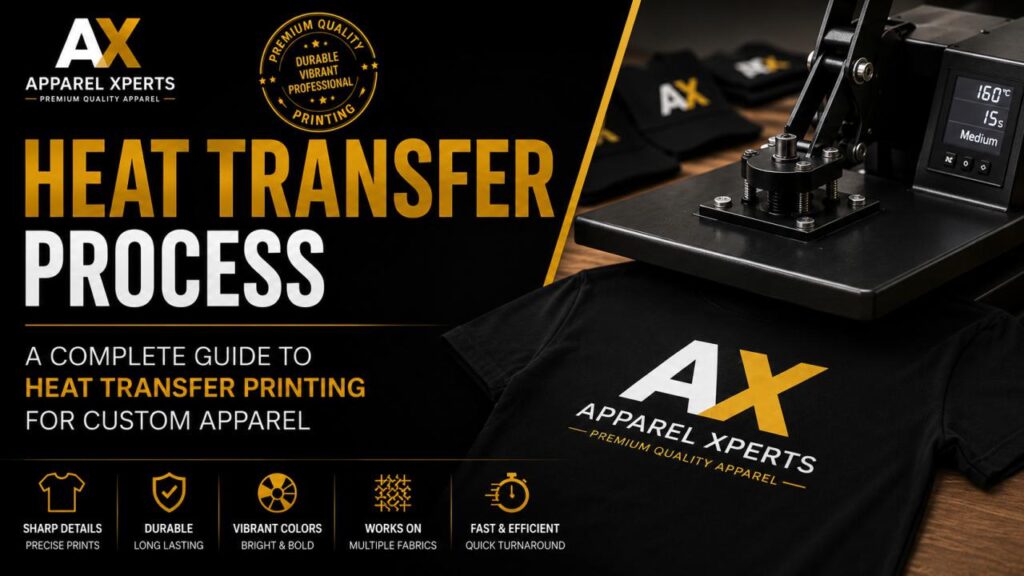
May 21, 2026Heat Transfer Process: A Complete Guide to Heat Transfer Printing for Custom Apparel
In today’s fast-moving custom apparel industry, brands need printing methods that are fast, flexible, durable, and suitable for different garment styles. The heat transfer process has become one of the most popular decoration techniques for custom t-shirts, hoodies, sports uniforms, activewear, promotional clothing, and private label apparel.
Heat transfer printing uses heat and pressure to apply a design onto fabric. Depending on the design, fabric type, order quantity, and durability requirements, manufacturers may use methods such as heat transfer vinyl, digital heat transfer, DTF printing, plastisol transfer, or sublimation heat transfer.
For clothing brands, sports teams, retailers, wholesalers, and businesses, this method offers a practical solution for producing high-quality custom apparel with sharp details, vibrant colors, and professional finishing.
At Apparel Xperts, we help brands choose the right printing method based on fabric, design complexity, order quantity, budget, and long-term durability needs.
What Is the Heat Transfer Process?
The heat transfer process is a garment printing technique where a design is first prepared on a transfer material and then applied to fabric using a heat press machine.
The machine uses controlled temperature, pressure, and time to bond the design with the garment surface. This makes heat transfer printing suitable for both simple logo placement and detailed full-color artwork.
Heat transfer printing is commonly used for:
- Custom t-shirts
- Custom hoodies
- Sports jerseys
- Team uniforms
- Gym wear and activewear
- Promotional apparel
- Corporate uniforms
- Fashion clothing
- Private label garments
Because it works well for small batches, personalized names and numbers, and detailed graphics, heat transfer is widely used by custom apparel manufacturers and clothing brands worldwide.
How Does Heat Transfer Printing Work?
The heat transfer process usually includes four main steps.
- Artwork Preparation
The design, logo, name, number, or graphic is prepared digitally. At this stage, the artwork must be adjusted for size, placement, color accuracy, and fabric compatibility.
For professional apparel production, clean vector artwork is preferred because it gives sharper results and better print quality.
- Printing or Cutting the Transfer
Depending on the method, the design is either printed onto transfer film/paper or cut from heat transfer vinyl.
For example:
- Vinyl transfer is cut into shapes and letters.
- Digital transfer is printed in full color.
- DTF transfer is printed on film with adhesive powder.
- Sublimation transfer is printed with sublimation ink for polyester fabrics.
- Heat Press Application
The transfer is placed on the garment and pressed using a heat press machine. The correct temperature, pressure, and pressing time are very important.
If the settings are wrong, the print may peel, crack, fade, or damage the fabric.
- Cooling and Quality Checking
After pressing, the garment is cooled and inspected. A professional manufacturer checks print placement, adhesion, color quality, edges, stretch, and overall finishing before packing.
Main Types of Heat Transfer Printing
- Heat Transfer Vinyl
- Sports jerseys
- Team uniforms
- Names and numbers
- Simple logos
- Custom hoodies
- Small-batch apparel
- Digital Heat Transfer
- Custom t-shirts
- Promotional clothing
- Fashion graphics
- Complex artwork
- Small production runs
- DTF Heat Transfer Printing
- Cotton garments
- Polyester garments
- Blended fabrics
- Dark-colored apparel
- Full-color designs
- Streetwear and fashion clothing
- Sublimation Heat Transfer
- Polyester sportswear
- Soccer uniforms
- Activewear
- All-over printed garments
- Performance apparel
Benefits of the Heat Transfer Process
High-Quality Print Results
Heat transfer printing can produce sharp details, bright colors, and clean edges. It is suitable for both simple branding and complex artwork.
Ideal for Customization
This method is excellent for personalized apparel, including player names, numbers, team logos, brand labels, and limited-edition designs.
Suitable for Small and Medium Orders
Unlike screen printing, heat transfer does not always require expensive setup. This makes it useful for startups, small brands, sports teams, and promotional orders.
Fast Production Time
Heat transfer printing allows quick turnaround, especially for urgent custom apparel orders.
Works on Different Garments
Heat transfer can be applied to t-shirts, hoodies, jackets, caps, bags, sportswear, and uniforms.
Great for Multi-Color Designs
For detailed and colorful artwork, digital transfer and DTF printing are strong options.
Heat Transfer vs Screen Printing
Both heat transfer and screen printing are popular apparel printing methods, but they are used for different needs.
Feature | Heat Transfer Printing | Screen Printing |
Best for | Small orders, personalization, detailed designs | Bulk orders, simple designs |
Setup cost | Lower | Higher |
Multi-color artwork | Excellent | Good, but setup increases |
Durability | High when applied correctly | Very high |
Production speed | Fast for small batches | Fast for bulk after setup |
Fabric compatibility | Depends on transfer type | Works on many fabrics |
Best use | Names, numbers, logos, fashion graphics | Bulk t-shirts, uniforms, brand merchandise |
If you need small-batch custom apparel, detailed graphics, or personalized uniforms, heat transfer is often a smart choice. For very large bulk orders with simple designs, screen printing may be more cost-effective.
Best Fabrics for Heat Transfer Printing
The best fabric depends on the type of heat transfer method.
Cotton
Cotton works well with HTV, digital transfer, and DTF printing. It is commonly used for t-shirts, hoodies, and casual wear.
Polyester
Polyester is ideal for sublimation printing and sportswear. It is widely used in soccer jerseys, gym wear, and performance uniforms.
Cotton-Poly Blends
Blended fabrics are suitable for many heat transfer methods, especially DTF and vinyl transfer.
Performance Fabrics
Moisture-wicking and stretch fabrics can also be printed, but they require proper testing to avoid scorching, peeling, or poor adhesion.
Common Uses of Heat Transfer Printing in Custom Apparel
Heat transfer printing is used across many apparel categories, including:
- Custom t-shirts for brands and events
- Hoodies for streetwear brands
- Soccer uniforms with names and numbers
- Basketball and football uniforms
- Gym and fitness apparel
- Corporate uniforms
- Promotional clothing
- School and college apparel
- Fashion merchandise
- Private label clothing collections
For custom apparel manufacturers, heat transfer is valuable because it supports flexible production and detailed customization.
Common Mistakes to Avoid in Heat Transfer Printing
Using the Wrong Temperature
Too much heat can damage fabric, while too little heat can cause poor bonding.
Incorrect Pressure
Uneven pressure can result in peeling edges, weak adhesion, or incomplete transfer.
Poor Quality Transfer Material
Low-quality vinyl, film, or paper can reduce durability and affect the final appearance.
Choosing the Wrong Fabric
Not every transfer works on every fabric. The printing method must match the garment material.
Ignoring Wash Care
Even high-quality heat transfer prints need proper washing care. Turning garments inside out, using mild detergent, and avoiding high heat drying can help extend print life.
Is Heat Transfer Printing Durable?
Yes, heat transfer printing can be durable when high-quality materials, correct heat press settings, and proper production techniques are used.
Durability depends on:
- Transfer material quality
- Fabric type
- Pressing temperature
- Pressure level
- Application time
- Washing method
- Garment usage
For sportswear and activewear, the print should also be tested for stretch, sweat resistance, and repeated washing.
Why Clothing Brands Use Heat Transfer Printing
Clothing brands use heat transfer printing because it offers flexibility, speed, and professional customization. It allows brands to test new designs, create limited collections, personalize products, and produce small or medium batches without heavy setup costs.
For startups and private label brands, this is especially useful because they can launch custom apparel with lower risk and faster production.
Heat Transfer Printing for Sports Uniforms
Heat transfer is widely used in sports uniforms because teams often need names, numbers, logos, sponsor marks, and custom graphics.
For soccer jerseys, basketball uniforms, baseball jerseys, and gym wear, heat transfer can provide clean branding and personalization. Sublimation is especially popular for polyester sportswear because it creates lightweight, breathable, and long-lasting designs.
At Apparel Xperts, we manufacture custom sports uniforms with printing, sublimation, embroidery, labels, and complete branding options for teams, clubs, schools, and sportswear brands.
Heat Transfer Printing for Hoodies and Streetwear
Hoodies, sweatshirts, and streetwear garments often use heat transfer for chest logos, sleeve prints, back graphics, and custom labels.
DTF and vinyl transfer are popular for hoodie printing because they allow bold designs, sharp colors, and flexible customization.
For streetwear brands, heat transfer printing is useful for limited drops, custom logo placement, oversized hoodie graphics, and private label collections.
Why Choose Apparel Xperts for Custom Heat Transfer Apparel?
Apparel Xperts is a custom apparel manufacturer based in Sialkot, Pakistan, offering complete garment manufacturing and customization solutions for global brands, retailers, wholesalers, sports teams, and businesses.
We provide custom apparel services including:
- Heat transfer printing
- Sublimation printing
- Screen printing
- Embroidery
- Cut and sew manufacturing
- Private label clothing
- Custom sports uniforms
- Custom hoodies and t-shirts
- Brand labels and packaging
Whether you need custom t-shirts, hoodies, sports uniforms, activewear, or private label clothing, Apparel Xperts helps you choose the right printing method according to your fabric, design, budget, and order quantity
Frequently Asked Questions
Q1: What is the heat transfer process in apparel printing?
Answer: The heat transfer process is a printing method where a design is applied to fabric using heat, pressure, and transfer material.
Q2: Is heat transfer printing good for custom clothing?
Answer: Yes, heat transfer printing is a good option for custom clothing, especially for small batches, detailed designs, logos, names, numbers, and personalized apparel.
Q3:Which is better, heat transfer or screen printing?
Answer: Heat transfer is better for small orders, multi-color artwork, and personalization. Screen printing is usually better for large bulk orders with simple designs.
Q4: Can heat transfer printing be used on hoodies?
Answer: Yes, heat transfer printing works well on hoodies, sweatshirts, jackets, and other casual wear garments.
Q5: Is heat transfer good for sports uniforms?
Answer: Yes, heat transfer is commonly used for sports uniforms, especially for names, numbers, team logos, and sponsor branding.
Q6: Which fabric is best for heat transfer printing?
Answer: Cotton, polyester, cotton-poly blends, and performance fabrics can all be used, depending on the transfer method.
Q7: Does heat transfer printing crack or peel?
Answer: High-quality heat transfer printing should not crack or peel easily when applied correctly. Poor materials, wrong heat settings, or improper washing can reduce durability.
Q8: Is sublimation a heat transfer process?
Answer: Yes, sublimation is a type of heat transfer process mainly used for polyester fabrics and sportswear.
Q9: Can heat transfer printing handle full-color designs?
Answer: Yes, digital heat transfer and DTF printing can handle full-color artwork, gradients, and detailed graphics.
Q10: Why do brands choose heat transfer printing?
Answer: Brands choose heat transfer printing because it is flexible, fast, cost-effective for small batches, and suitable for customized apparel.
Final Thoughts
The heat transfer process is one of the most versatile printing methods in modern custom apparel manufacturing. It gives brands the flexibility to create high-quality t-shirts, hoodies, sports uniforms, promotional clothing, and private label garments with professional finishing.
From simple logos to full-color graphics, heat transfer printing offers excellent customization options for clothing brands, teams, businesses, and retailers.
If you are looking for a reliable custom apparel manufacturer for heat transfer printing, sublimation, embroidery, screen printing, or complete private label clothing production, Apparel Xperts can help you create premium-quality garments tailored to your brand.
Get a Free Quote for Custom Apparel Manufacturing
Looking for custom t-shirts, hoodies, sports uniforms, activewear, or private label clothing with professional heat transfer printing?
Contact Apparel Xperts today to discuss your custom apparel project and get expert guidance on the best printing method for your garments.
CTA Button Text:
Get a Free Quote